Kwon,jae-Hwa Traditional Taekwon-do System

1965-2024
59 years in Europe

Definition of TaeKwon-Do

“Tae” means “foot” or “to strike with the feet”. “Kwon” means “hand”, or “to strike with the hand”. “Do” means discipline, art, or way. HenceTaeKwonDo (foot-hand-way) means literally “the art of the feet and the hands” or “the art of kicking and punching”.

1946: Traditional Taekwondo

The term traditional Taekwondo typically refers to martial arts practised in Korea during the 1940s and 1950s by the nine original kwans, or martial arts schools, after the conclusion of the Japanese occupation of Korea at the end of World War II. The term Taekwondo had not yet been coined, and in reality, each of the nine original kwans practised its own style of martial art. The term traditional Taekwondo serves mostly as an umbrella term for these various styles, as they themselves used various other names such as Tang Soo Do (Chinese Hand Way), Kong Soo Do (Empty Hand Way) and Tae Soo Do (Foot Hand Way). In 1959, the name Taekwondo was agreed upon by the nine original kwans as a common term for their martial arts. As part of the unification process, The Korea Taekwondo Association (KTA) was formed through a collaborative effort by representatives from all the kwans,

Philosophy of TaeKwonDo

Different styles of taekwondo adopt different philosophical underpinnings. Many of these underpinnings however refer back of the Five Commandments of the Hwarang as a historical referent. For example, Choi Hong Hi expressed his philosophical basis for taekwondo as the Five Tenets of Taekwondo

Ye-Ui, courtesy
Yom-Chi, integrity
In-Nae, perseverance, patience
Guk-Gi, self-discipline
Beakjul-bool-gul, invincibility
These tenets are further articulated in a taekwondo oath, also authored by Choi:

I undertake to comply with the principles of Taekwondo
I undertake to respect my coaches and all superiors
I undertake to abuse Taekwondo never
I pledge to stand up for freedom and justice
5 Different disciplines

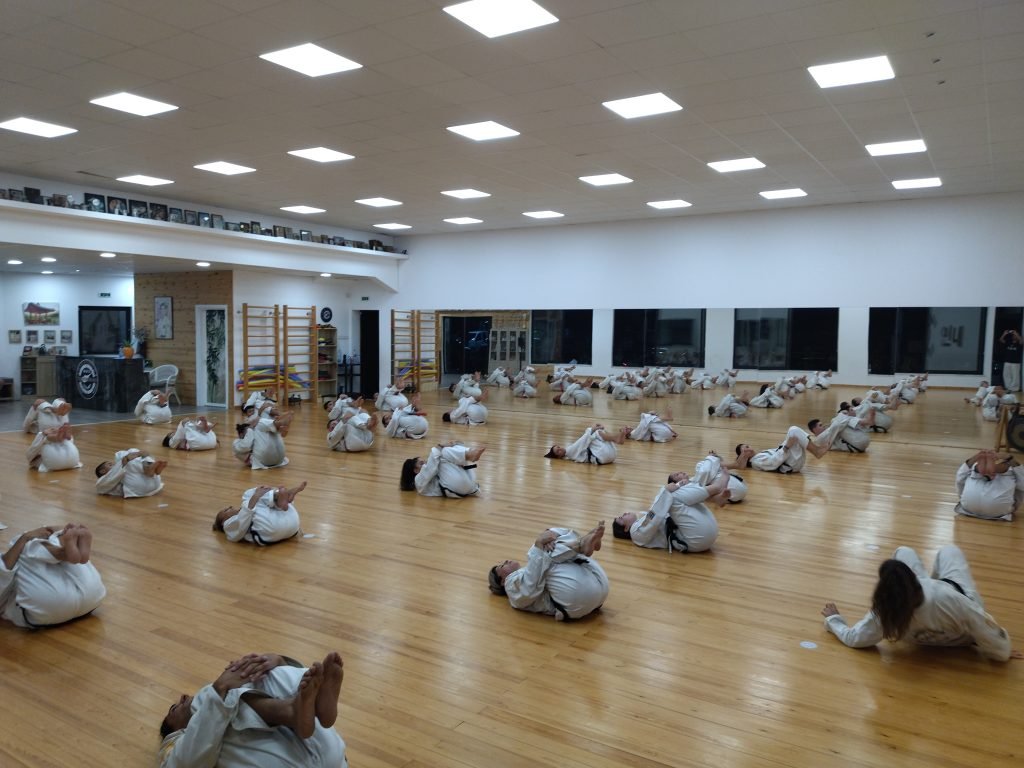
Gymnastic / Exercise (Chunbi-undong)

Training in Traditional Taekwon-do is designed to develop students strength, flexibility, stamina etc. The training is a mixed of a variety of exercises and technique combinations where body (hand-foot) but also mind (quick and memorable thinking) are working together in harmony. Each student threw training is improving his body and mind in many aspects and always according to his nature

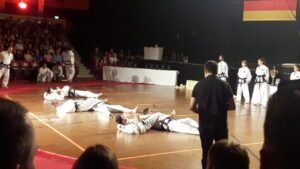
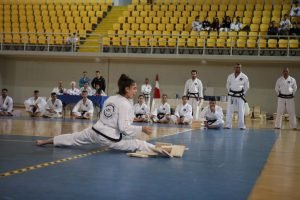
Break test (kyekpa)

Definetely ‘ woods dont hit back – Bruce Lee’ but the purpose of a break test is other than this common thought. Is to show and measure the power of body and same time of willingness of a student develop threw the years of training. Also, a show of good technique, focus and a beautiful and strong combination of TAE (foot), KWON (hand) and DO (spirit) that lead at the result of a successful break. A breaktest is students achievement and a great show of their skills development

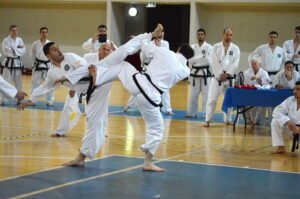
Self defense (ho sin sul)

Self defense was designed where an average person to be able to defend him/her self. This is also the main different between a martial art (Traditional Taekwon-do) and sports (World Taekwon-do) that arrange students sparring with categories.  In Traditional Taekwon-do students regarding age, body, being a male or a female threw the training combinations develop their self defense skills and how to be very effective practicing moves that not allowed or practice in sports Taekwon-do. Every move, every punch, every kick, every technique combination in Traditional Taekwon-do training is realistic self defense.

Free fight (chayu daeryon)

Students in free fight (no contact) or light contact sparring, without the use of any protection equipment demonstrate their skills of how to be effective, fast, powerful and same time with perfect control during their fight/sparring. Exactly as this should reflect on  students social life. Traditional Taekwon-do teaches students to be not a champion in school but a champion in life.

Ilbo Taeryon (one step fight)

One step sparring is the preliminary stage to free fight. Students learn how to move and execute combinations that are taught in training while an attacker is coming forward. In later teaching is also included a two and three step sparring.
The history of Modern Taekwondo began on March 11, 1944 when Dang Soo Do-Song Moo Kwan was founded by Byung Jick Ro in KaeSung City, Korea. Dang Soo Do-Chung Do Kwan, which followed six months later was founded by Won Kook Lee in Seoul, Korea, in September of 1944. Due to the unstable situation in Korea at the time, both schools were forced to close their doors to the public within three to four months after opening. It was the end of World War II and Korea was under Japanese occupation. Japan was taking most of the young adult Korean males under the age of 60 and using them wherever they needed, so understandably, most of the young Korean men were uneasy and fearful during this time and were trying to hide themselves. Training in sports was not a priority in their lives and the martial arts took a back seat to simple survival. With the end of the Japanese occupation of Korea on August 15, 1946, Taekwondo began to once again flourish and spread to the general Korean public. However, all of the kwans were again forced to close their doors in 1950 due to the onset of the Korean war. Since this time, the original name of the martial art has changed from Dang Soo Do to Kong Soo Do or Soo Bak, Kwun Bup to Tae Soo Do and finally to today’s Taekwondo. Below is a brief overview of the history of the “original founding kwans” who formed modern day Taekwondo:

Add Your Heading Text Here

Lorem ipsum dolor sit amet, consectetur adipiscing elit. Ut elit tellus, luctus nec ullamcorper mattis, pulvinar dapibus leo.

About School

About Us

Services

Community

Testimonial

Help Centre

Quick Links

Classes

Events

Programs

Become Teacher

Contact Us

© 2025