Kwon,jae-Hwa Traditional Taekwon-do System
1965-2024
59 years in Europe
Definition of TaeKwon-Do
“Tae” means “foot” or “to strike with the feet”. “Kwon” means “hand”, or “to strike with the hand”. “Do” means discipline, art, or way. HenceTaeKwonDo (foot-hand-way) means literally “the art of the feet and the hands” or “the art of kicking and punching”.
1946: Traditional Taekwondo
The term traditional Taekwondo typically refers to martial arts practised in Korea during the 1940s and 1950s by the nine original kwans, or martial arts schools, after the conclusion of the Japanese occupation of Korea at the end of World War II. The term Taekwondo had not yet been coined, and in reality, each of the nine original kwans practised its own style of martial art. The term traditional Taekwondo serves mostly as an umbrella term for these various styles, as they themselves used various other names such as Tang Soo Do (Chinese Hand Way), Kong Soo Do (Empty Hand Way) and Tae Soo Do (Foot Hand Way). In 1959, the name Taekwondo was agreed upon by the nine original kwans as a common term for their martial arts. As part of the unification process, The Korea Taekwondo Association (KTA) was formed through a collaborative effort by representatives from all the kwans,
Philosophy of TaeKwonDo
Different styles of taekwondo adopt different philosophical underpinnings. Many of these underpinnings however refer back of the Five Commandments of the Hwarang as a historical referent. For example, Choi Hong Hi expressed his philosophical basis for taekwondo as the Five Tenets of Taekwondo
Ye-Ui, courtesy
Yom-Chi, integrity
In-Nae, perseverance, patience
Guk-Gi, self-discipline
Beakjul-bool-gul, invincibility
These tenets are further articulated in a taekwondo oath, also authored by Choi:
I undertake to comply with the principles of Taekwondo
I undertake to respect my coaches and all superiors
I undertake to abuse Taekwondo never
I pledge to stand up for freedom and justice
5 Different disciplines
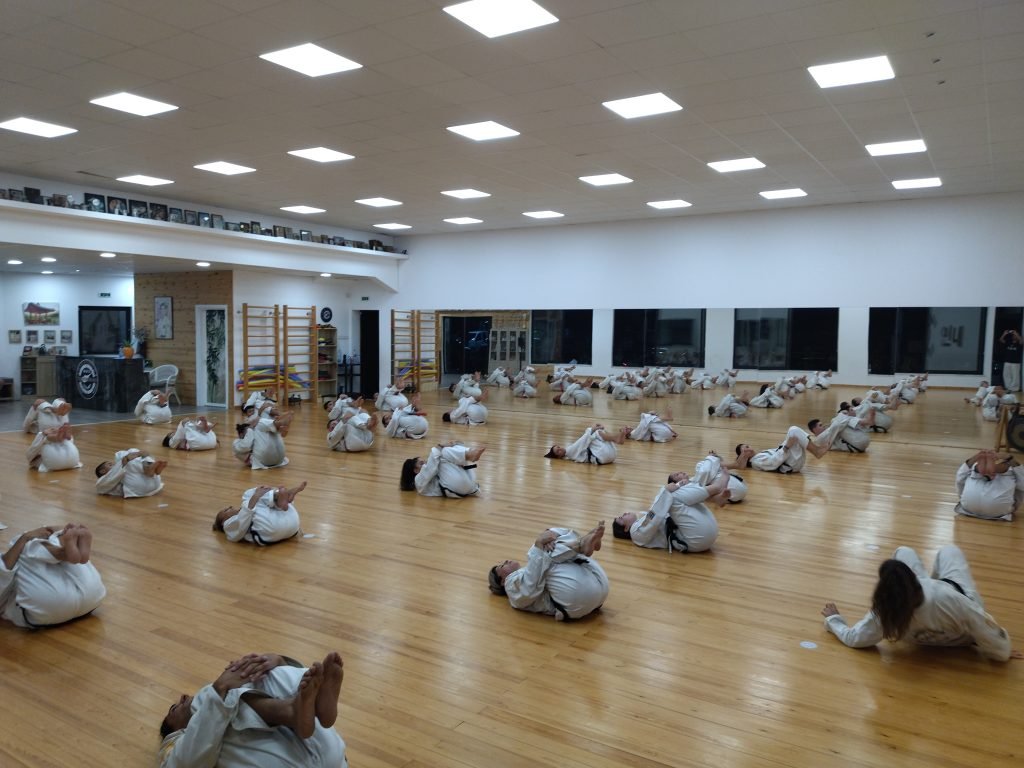
Gymnastic / Exercise (Chunbi-undong)
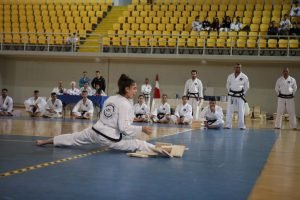
Break test (kyekpa)
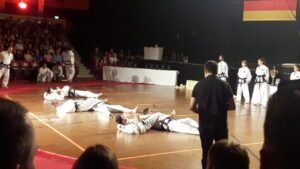
Self defense (ho sin sul)
Free fight (chayu daeryon)
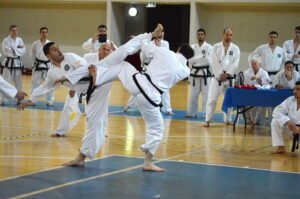
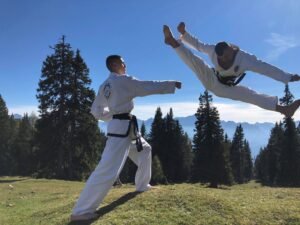
Ilbo Taeryon (one step fight)
SONG MOO KWAN (Dang Soo Do)”] – Founder: Byung Jick Ro
March 20, 1944: Song Moo Kwan founded at Ja Name Dong (Kwan Duk Jung), KaeSung City, Kyung Ki Providence
May 2, 1946: re-established at Dong Hung Dong, KaeSung City, Kyung Ki Providence
June 25, 1950: closed doors due to the Korean War
September 20, 1953: re-established Ah Hyung Dong, Mapogu, Seoul, Korea
“CHUNG DO KWAN (Dang Soo Do)”]- Founder: Won Kook Lee
September 1944: Chung Do Kwan funded at Ok Chun Dong (Young Shin School), Suh Dae Moo Gue, Seoul, Korea
April 1946: re-established at Gyun Ji Dong (Si Chun Gyo Dang), Jong Ro Gu, Seoul, Korea
June 25, 1950: closed doors due to the Korean War
October 1953: re-established in Gyun Ji Dong (Si Chun Gyo Dang), Jong Ro Gu, Seoul, Korea. When this group was re-established in 1953, they did not have an instructor. Two students of Mr. Lee’s, Jong Myong Hyun and Wun Shik Min, requested Master Byung Jick Ro to come as an instructor. Master Ro helped them re-establish and teach their students until December 1954. Before leaving, he appointed Duk Sung Sohn as head and Mr. Hyun and Mr. Min as instructors.[/pane]
“CHUNG DO KWAN (Dang Soo Do)”]- Founder: Won Kook Lee
September 1944: Chung Do Kwan funded at Ok Chun Dong (Young Shin School), Suh Dae Moo Gue, Seoul, Korea
April 1946: re-established at Gyun Ji Dong (Si Chun Gyo Dang), Jong Ro Gu, Seoul, Korea
June 25, 1950: closed doors due to the Korean War
October 1953: re-established in Gyun Ji Dong (Si Chun Gyo Dang), Jong Ro Gu, Seoul, Korea. When this group was re-established in 1953, they did not have an instructor. Two students of Mr. Lee’s, Jong Myong Hyun and Wun Shik Min, requested Master Byung Jick Ro to come as an instructor. Master Ro helped them re-establish and teach their students until December 1954. Before leaving, he appointed Duk Sung Sohn as head and Mr. Hyun and Mr. Min as instructors.[/pane]